ivo.sk
 
For more information about IVO's activities, please send us your e-mail adress
send
  search
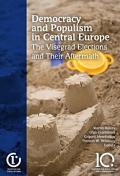
Democracy and Populism in Central Europe: The Visegrad Elections and Their Aftermath

Editor
Bútora Martin, Gyárfášová Oľga, Mesežnikov Grigorij, Skladony W. Thomas

Author
Bútora Martin, Bútorová Zora, Fomina Joanna, Gabal Ivan, Gyárfášová Oľga, Krause Kevin, Krivý Vladimír, Kucharczyk Jacek, Kéri Lázsló, Lang Kai-Olaf, Mesežnikov Grigorij, Rupnik Jacques, Shepherd Robin, Strážay Tomáš, Szomolányi Soňa, Tamás Pál, Učeň Peter

Imprint
IVO, Bratislava, 2007

Language
English

Annotation 

The 2005–2006 parliamentary elections in Poland, Hungary, Slovakia, and the Czech Republic were the first to take place since all four countries joined the European Union in 2004. These elections represent important milestones in the political development of each of these postcommunist countries. In their similarities and differences, the elections and their aftermath shed new light on the ongoing challenges of a democratic consolidation that now takes place in the wider arena of Europe.

In September 2006 the Institute for Public Affairs convened an international conference in Bratislava entitled “Visegrad Elections: Domestic Impact and European Consequences.” The conference brought together a diverse group of political scientists, sociologists, journalists, public-opinion analysts, and democracy practitioners from the Visegrad Group countries and beyond, for discussions of the 2005–2006 election campaigns and their outcomes, the formation and behavior of the new coalition governments, trends in political culture and public opinion, the rise of populism and nationalism, bilateral and regional relations, and the future European Union integration of all four countries.

Most of the contributions in this volume, Democracy and Populism in Central Europe: The Visegrad Elections and Their Aftermath, are revised and updated versions of papers presented at this IVO conference. The volume begins with a comparative introduction to the party systems and coalition behaviors in the Visegrad Group countries. Part One then presents four individual-country election case studies. Part Two features a set of chapters that place the rise of populism in the Visegrad Group within the comparative context of Western Europe and beyond. And Part Three examines the impact of the 2005–2006 Visegrad elections on European security, especially on the volatile Western Balkans region.

The diversity of professional backgrounds of the book’s contributors has resulted in what the editors believe is a useful mix of contributions, ranging from political narratives and commentary to empirical and theoretical analyses. The publication will be accessible to broad audience of policy makers, diplomats, journalists, academics, and civic activists. We hope that readers of Democracy and Populism in Central Europe: The Visegrad Elections and Their Aftermath find it to be a valuable source of information and analysis on domestic developments in Central Europe and their impact on all of Europe.


Product details
 Number of pages   248
 Format   paperback
 ISBN   978-80-88935-96-4


>> Back to Books
Slovakia 2009. Trends in Quality of Democracy
An output of the project IVO Barometer which evaluates the state and quality of democracy in Slovakia after it became a full-fledged member of the EU.
Slovakia 2009. Trends in Quality of Democracy


e-Governance in Slovakia 2006-2008
The CD offers several key studies and analyses on e-Governance – the result of an empirical research project.
e-Governance in Slovakia 2006-2008

Towards Equal Treatment
Institute for Public Affairs is partner of the Initiative Towards Equal Treatment: Awareness Raising and Multi-Level Empowerment of the Civil Society and Public Actors in the Field of Anti-Discrimination implemented in Slovakia within PROGRESS framework.
Towards Equal Treatment
Content © 2006 Inštitút pre verejné otázky.
Design © 2006 Komplot
Generated by Buxus content management system from ui42.


tlačiťposlaťhore